



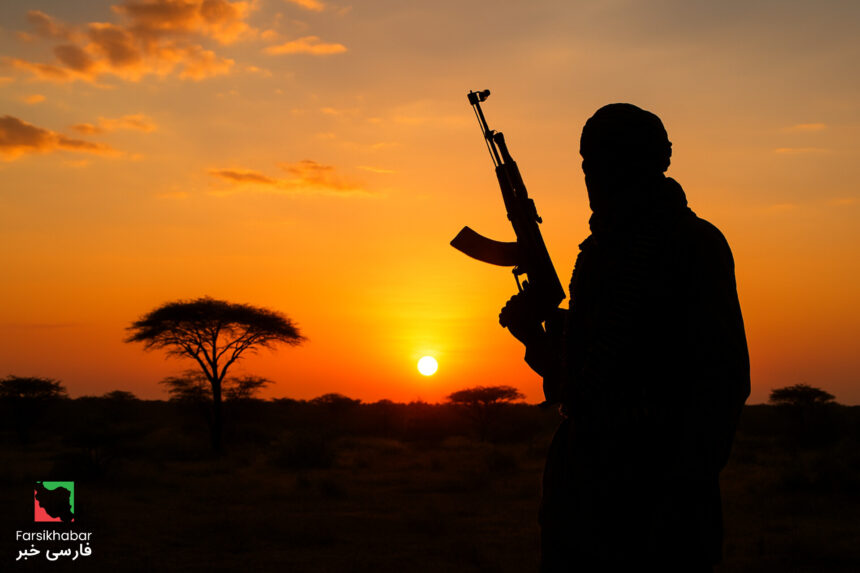
Intellectual terrorism is not just an academic term found in books; it is a hidden weapon that goes beyond bullets and bombs. This form of terrorism plants its roots in the minds long before it appears on the battlefield. Through it, an idea turns into a doctrine, the doctrine becomes behavior, and violence becomes the natural outcome of an environment saturated with distorted rhetoric. In this context, understanding the relationship between ideas and armed organizations is essential to grasping the real danger that threatens societies and states.
The Idea Is More Dangerous than the Weapon
In confronting extremist organizations, many believe that bullets are the beginning and the end of the story, but the truth is that the idea is far more dangerous.
Before a young man ever holds a weapon, he has gone through a complete brainwashing process that begins with selective interpretation of religious texts and ends with planting hatred toward society and anyone different.
Here, intellectual terrorism emerges as the most dangerous weapon used by extremist groups.
Intellectual terrorism creates an environment that allows crimes to be justified and given false legitimacy.
Every bullet fired at an innocent person had behind it a preacher or ideologue who planted the idea in the mind of a desperate youth.
Weapons may run out, but the idea remains and spreads. For this reason, combating intellectual terrorism is just as important as confronting weapons themselves.What makes intellectual terrorism more dangerous than any weapon is its ability to continuously reproduce violence.
Even if a group of militants is eliminated, the ideas that shaped them will find new followers.
This is the real danger; the idea becomes an inexhaustible source for generating extremism.
Therefore, the main battle is not only in the field of combat but in the minds. Combating intellectual terrorism requires intellectual, educational, and media tools that dismantle extremist messages and restore the value of moderate religious discourse so that young people do not remain an easy prey for violent groups.
From the Brotherhood to al-Shabaab: The Journey of the Idea before the Gun
History shows that the Muslim Brotherhood was the ideological source that nourished most armed groups in the region.
This organization provided the intellectual framework that legitimizes violence and presents it as a way to change reality.
From here, the Somali al-Shabaab movement drew much of its rhetoric and behavior.Al-Shabaab did not emerge in a vacuum; it came as the result of a long path of ideological accumulation that the Brotherhood had laid for decades.
Every discourse about sovereignty of God or jihad in its politicized form eventually found its way into the minds of the members of these groups.
Here it becomes clear that intellectual terrorism is the bridge connecting the parent organization to its offspring movements.
The slogans may differ, but the essence is the same: rhetoric that sanctifies conflict and excludes any possibility of coexistence.
In this sense, al-Shabaab is merely a practical reflection of the idea planted by the Brotherhood in the minds of young people.
Over time, words turn into actions, and books into rifles.What makes this journey so dangerous is its ability to move from one country to another and from one generation to the next.
Ideas know no borders, and the intellectual terrorism that began with the Brotherhood found its extensions in East Africa with al-Shabaab, showing the deep connection between ideological sources and military execution.
Invisible Victims: Families and Society Facing Intellectual Terrorism
When terrorism is mentioned, what often comes to mind are images of bombings and direct victims.
But there are invisible victims: families that lost their children to recruitment, women who suffered exploitation under a false religious cover, and children deprived of education due to unstable environments.
All of these pay the price of intellectual terrorism even before a single bullet is fired.Women, in particular, are the most vulnerable to exploitation.
Harsh restrictions are imposed on them under fabricated religious justifications, and they are used in marginal roles that serve the organization.
This spiritual and physical enslavement is a direct product of the Brotherhood’s discourse that feeds al-Shabaab.
Here it becomes clear that intellectual terrorism does not only affect male fighters but extends to tear apart the social fabric as a whole.
Children also become innocent victims. These groups exploit their vulnerability, making them easy tools for recruitment or depriving them of educational opportunities.
When children grow up in an environment poisoned by hate speech, they transform into a new generation ready to carry weapons.
In this way, intellectual terrorism becomes a machine that reproduces violence generation after generation.
Whole societies undergo deep tremors. Economies decline, cities lose their stability, and essential services collapse.
All of this is the result of an idea manipulated and used as a weapon. From this, we understand that intellectual terrorism does not only threaten specific individuals but the existence and stability of entire societies.
A Future without Confrontation: The Most Dangerous Scenario of Intellectual Terrorism
If intellectual terrorism is not confronted at its roots, the world is heading toward new and more complex waves of violence.
The idea is capable of adapting to changing circumstances and can find new ways to spread through digital media and cross-border financial networks.
This means that the threat will not recede but will multiply.The most dangerous scenario is that entire regions could turn into unstable hubs where youth are fed with hate speech, creating the perfect environment for spawning new armed groups.
In this case, the threat would not be limited to East Africa or the Middle East but would extend to Europe, Asia, and the security of global navigation.
On the humanitarian level, leaving intellectual terrorism unchecked means sacrificing entire generations.
Youth would be lured into battlefields instead of universities, women would lose their rights in the name of religion, and children would be deprived of a safe future.
This is not a temporary threat but a catastrophe with long-lasting effects that could last for decades.
From here, it becomes clear that the real solution in confronting this phenomenon must go beyond security measures to address the ideological source itself.
The confrontation must be intellectual, educational, and cultural, because defeating intellectual terrorism necessarily means drying up the sources of violence.
Without that, the world will remain trapped in an endless cycle of blood and tears.