



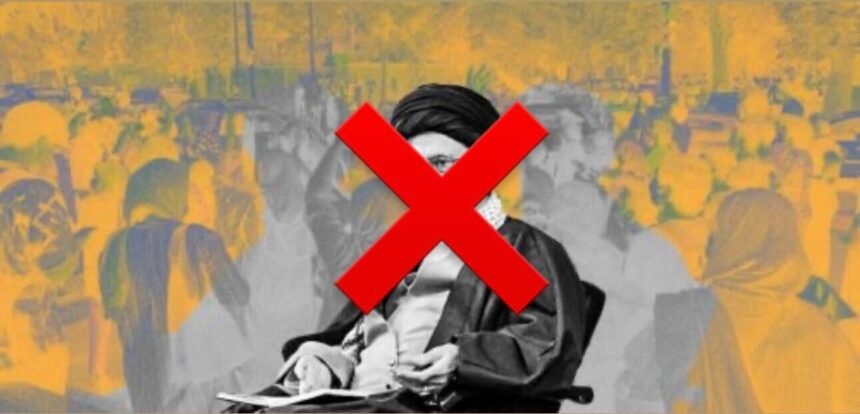
Savakzadeh, a prominent Iranian influencer and supporter of the Shah, shares his clear and uncompromising perspective on the future of Iran and the role of the current regime in regional instability. Known for his insightful commentary, he sheds light on the challenges facing the country, the limits of the Islamic Republic’s influence, and the potential path toward national stability.
Savakzadeh on the Future of the Iranian Regime
Question: In your opinion, what does the future hold for the current Iranian regime, which you refer to as a terrorist regime? Do you think its end is near?
Savakzadeh: There is no future for the Islamic Republic, and that can clearly be seen.
Not for its friends and not for themselves and not for the people of Iran. It has already reached its end and way past its intended expiration date.
What we are seeing now is a decaying carcass that different factions are feeding on.
Its stench is suffocating our people and destroying our country, so its removal is absolutely necessary, but it must be done in a way where we pay the least amount of price.
There is a clear path forward that is being worked on, and people need to move their efforts toward it. National Cooperation is the way in my opinion.
Savakzadeh on Iran’s Fragile Influence Through Proxies
Question: Do you believe that Iran’s influence has expanded across various sectors through proxies such as the Muslim Brotherhood, the ongoing events in Sudan — including support to the Sudanese army with weapons and training of military commanders — as well as Hezbollah?
Savakzadeh: The regime lacks competence and capability within itself, so it relies on others to operate.
For 47 years it has used Iran’s resources to pay and empower groups to act on its behalf, whether it be through tactical cooperation with the Muslim Brotherhood, or through direct proxies like Hamas, Hezbollah, and the Houthis, or through state-level partners such as Qatar.
This is how it extends influence while avoiding direct responsibility.
Its influence has no extended tho, it’s about the same but weakened so now it relies on creating chaos as much as it can, to make it expensive and difficult for others to work against it.
Savakzadeh on Deterrence and the Return of the Shah
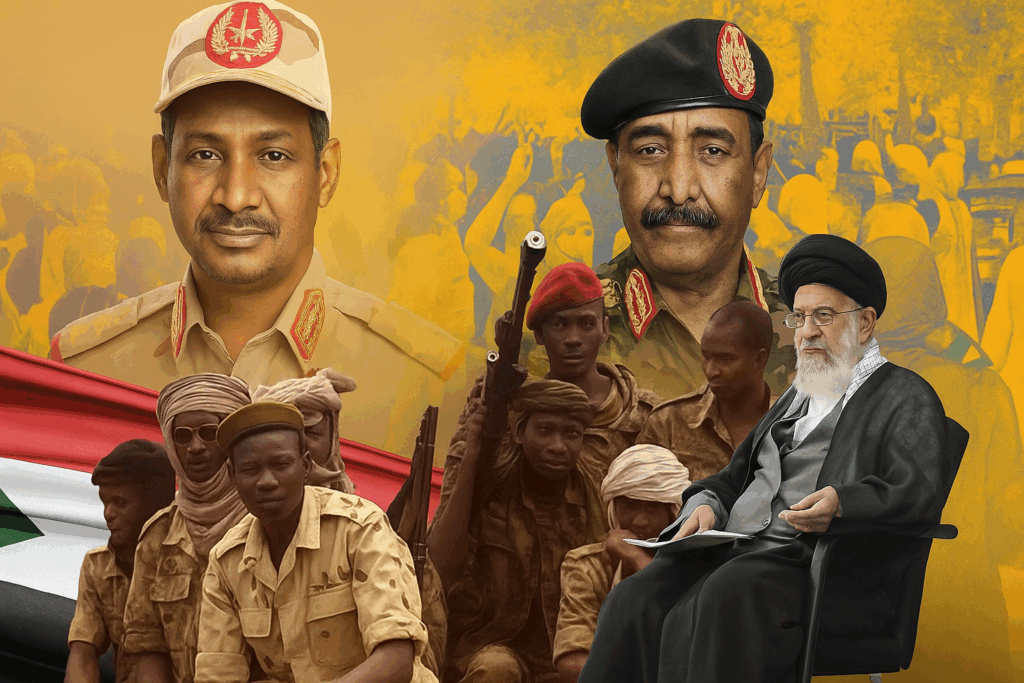
Question: How do you foresee the deterrence policies that Israel and the United Arab Emirates might adopt against this corrupt regime? And could the return of the Shah to Iran, with the support of Israel and the UAE, contribute to achieving security and peace in the region?
Savakzadeh: The regime lacks competence and capability within itself, so it relies on others to operate.
For 47 years it has used Iran’s resources to pay and empower groups to act on its behalf, whether it be through tactical cooperation with the Muslim Brotherhood, or through direct proxies like Hamas, Hezbollah, and the Houthis, or through state-level partners such as Qatar.
This is how it extends influence while avoiding direct responsibility.Sudan is another example of this same strategy. The Islamic Republic benefits from instability and power vacuums.
By inserting itself into Sudan and gaining influence along the Red Sea, it keeps open weapons transfer routes to its allies and maintains leverage against Saudi Arabia, the UAE, and Israel.
Chaos becomes the only tool the mullahs rely on to prolong their existence, while the true source of regional instability, which is the regime itself, remains unaddressed.
Israel and the UAE and others will continue applying military and economic pressure, exposing the regime’s weaknesses, which has become more visible as Israel has shown the regime to be a paper tiger.
They are forming regional alliances such as the Abraham Accords, but lasting peace is impossible as long as the Islamic Republic controls Iran’s resources and uses them to fuel conflict.
The only path to stability is restoring Iran’s rightful national statehood and political identity.
The return of His Majesty Reza Shah II is the logical, stable, and only viable solution that aligns with regional security and long-term peace.
There is no Abraham Accords without a free Iran. The Cyrus Accords, however, are actually achievable, realistic, and lasting.